Our accreditations
 NICEIC Approved Contractor
 NICEIC Domestic Installer
 NICEIC PAT Registered
 City & Guilds
What Our Customers Say
Real feedback from property managers, landlords and businesses — verified on Google.
Tony Mann
Local Guide · Milton Keynes
✓ Verified Google Review
Taya Cleghorn
Business Owner · Bedford
Marina Azhar
Property Manager · London
Tony Mann
Local Guide · Milton Keynes
✓ Verified Google Review
Taya Cleghorn
Business Owner · Bedford
Marina Azhar
Property Manager · London
What is emergency lighting testing?
Emergency lighting testing is the formal inspection and functional testing of emergency luminaires and escape route signage to confirm they will operate correctly when the normal lighting supply fails. Testing is carried out to the requirements of BS 5266-1 — the British Standard for emergency lighting in buildings.
Every luminaire, exit sign, and central battery circuit is tested to confirm it illuminates to the correct lux level and sustains output for the full rated duration of the system. The overall outcome is either Satisfactory — the system is fully operational — or Unsatisfactory, meaning one or more luminaires failed and must be replaced before the system can be relied upon.
You receive a formal test log listing every luminaire tested, the test result, any failures, and the date of the next required test — giving you a complete, auditable record of system performance.
Emergency lighting system types
Only illuminates on mains failure
The most common type in commercial premises. Luminaires are off during normal operation and only activate when the mains supply fails. Self-contained battery unit in each fitting.
Continuously illuminated
The luminaire remains on at all times — typically used in cinemas, theatres, and high-occupancy public spaces. On mains failure it continues to operate from its battery supply.
Powered from a central supply
All luminaires are powered from a single central battery system rather than individual self-contained batteries. Common in larger buildings. Requires periodic capacity and load testing of the central battery.
Source: BS 5266-1:2016
When is testing required?
Monthly functional test
BS 5266-1 requires a short functional test of every luminaire every month. The supply to each fitting is interrupted briefly to confirm the lamp illuminates and the battery is accepting charge. This can be carried out by the responsible person using a key switch, or automated via a test facility built into the system. Results must be recorded.
Annual full rated duration test
Once per year, every luminaire must be tested for its full rated duration — typically 3 hours for a standard system — to confirm the battery can sustain the required output for the entire period. This is an engineering visit that must be carried out when the building is unoccupied, as the test simulates a total mains failure.
All non-domestic premises
Any premises covered by the Regulatory Reform (Fire Safety) Order 2005 — offices, warehouses, shops, restaurants, HMOs, care homes, and educational premises — must have emergency lighting maintained in working order. Testing records must be retained and available for inspection by the Fire & Rescue Service on request.
After any alteration or fault
Any building alteration that changes escape routes, room layouts, or occupancy levels requires a review of the emergency lighting design to confirm coverage remains adequate. Individual luminaire failures must be repaired and retested promptly — a failed fitting on an escape route is a deficiency that must be recorded and remediated without delay.
Why is it a legal requirement?
Regulatory Reform (Fire Safety) Order 2005
The responsible person must ensure that escape routes are adequately illuminated and that emergency lighting is maintained in efficient working order. Failure to maintain and test emergency lighting is a criminal offence that can result in prosecution, unlimited fines, or imprisonment.
Workplace (Health, Safety and Welfare) Regulations 1992
Require that emergency lighting be provided in any room where persons are likely to be exposed to danger if artificial lighting fails — and that it is properly maintained. This applies to virtually all commercial and industrial premises where normal lighting is used.
Health and Safety at Work etc. Act 1974
Employers have a general duty of care to ensure premises are safe for all occupants. Documented monthly and annual testing records are the primary evidence that emergency lighting has been maintained — without them, you cannot demonstrate that duty was fulfilled to an enforcing authority, insurer, or court.
No test records means no defence
If a person is injured during an emergency evacuation and the emergency lighting failed, the absence of test records demonstrates the system was not being maintained as required by law. This leaves the responsible person with no defence against a civil claim or criminal prosecution.
Fire & Rescue Services routinely request emergency lighting test records during fire safety inspections. Gaps in the monthly log or a missing annual duration test certificate are common grounds for enforcement notices.
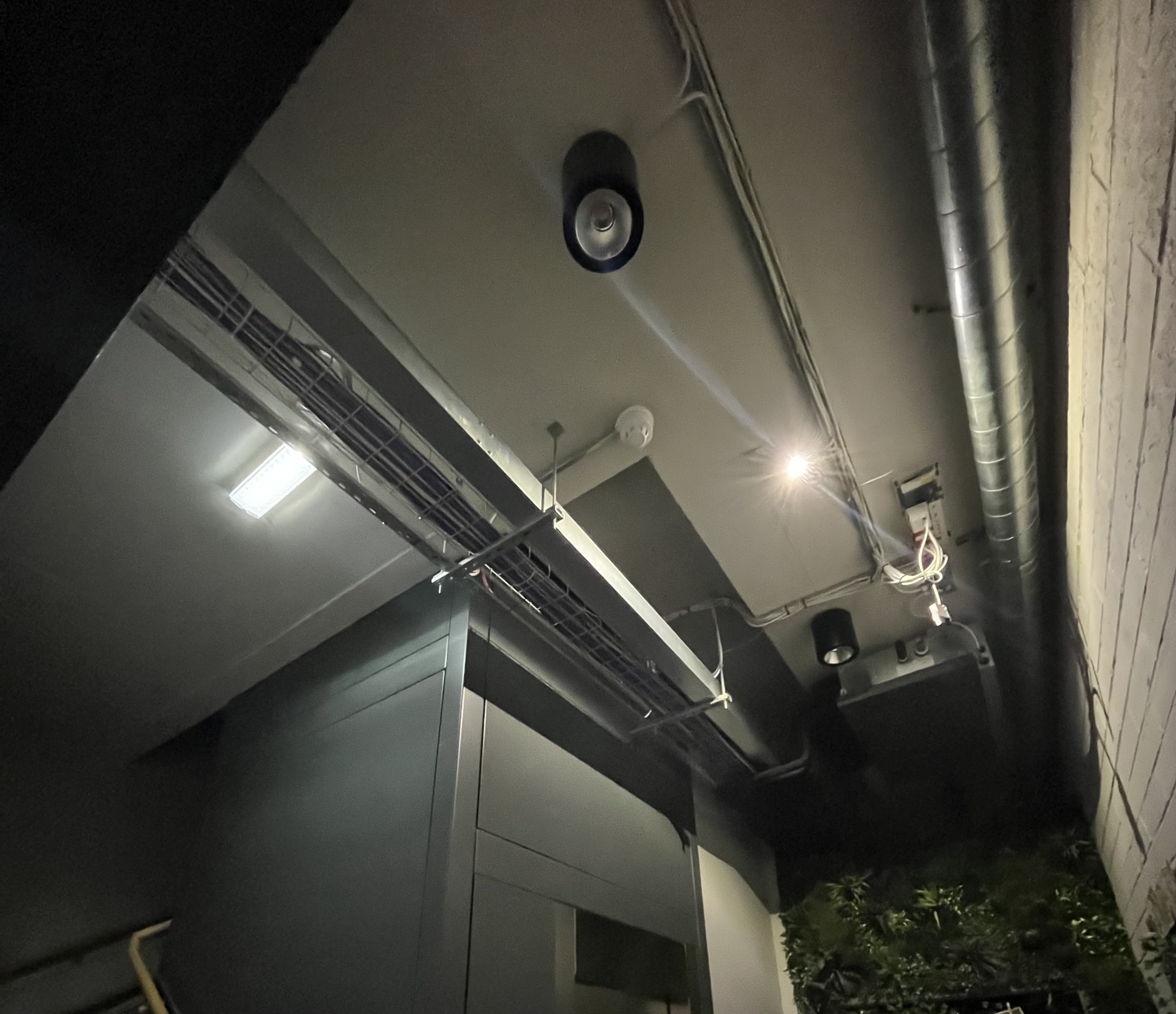
Who can carry out emergency lighting testing?
BS 5266-1 distinguishes between two levels of testing responsibility. The monthly functional test can be carried out by a trained responsible person on site using the system's key-switch or test facility, provided results are properly recorded. The annual full rated duration test must be carried out by a competent engineer.
A competent engineer must have sufficient knowledge of emergency lighting systems to test them safely and interpret results correctly. This includes understanding the system design, battery chemistry and ageing characteristics, lux level requirements for different areas, and the documentation requirements of BS 5266-1.
- Knowledge of BS 5266-1 requirements for different areas — escape routes, open areas, high-risk task areas.
- Ability to test self-contained and central battery systems safely, including isolating circuits without creating safety risk.
- Understanding of battery performance, end-of-life indicators, and when replacement is required before the next annual test.
- Ability to produce a compliant test log and identify where the installed coverage no longer meets the design standard.
NICEIC registration provides independent assurance that an electrical engineer meets ongoing competency requirements and is assessed regularly against current standards — the primary evidence a responsible person should require when appointing a testing contractor.
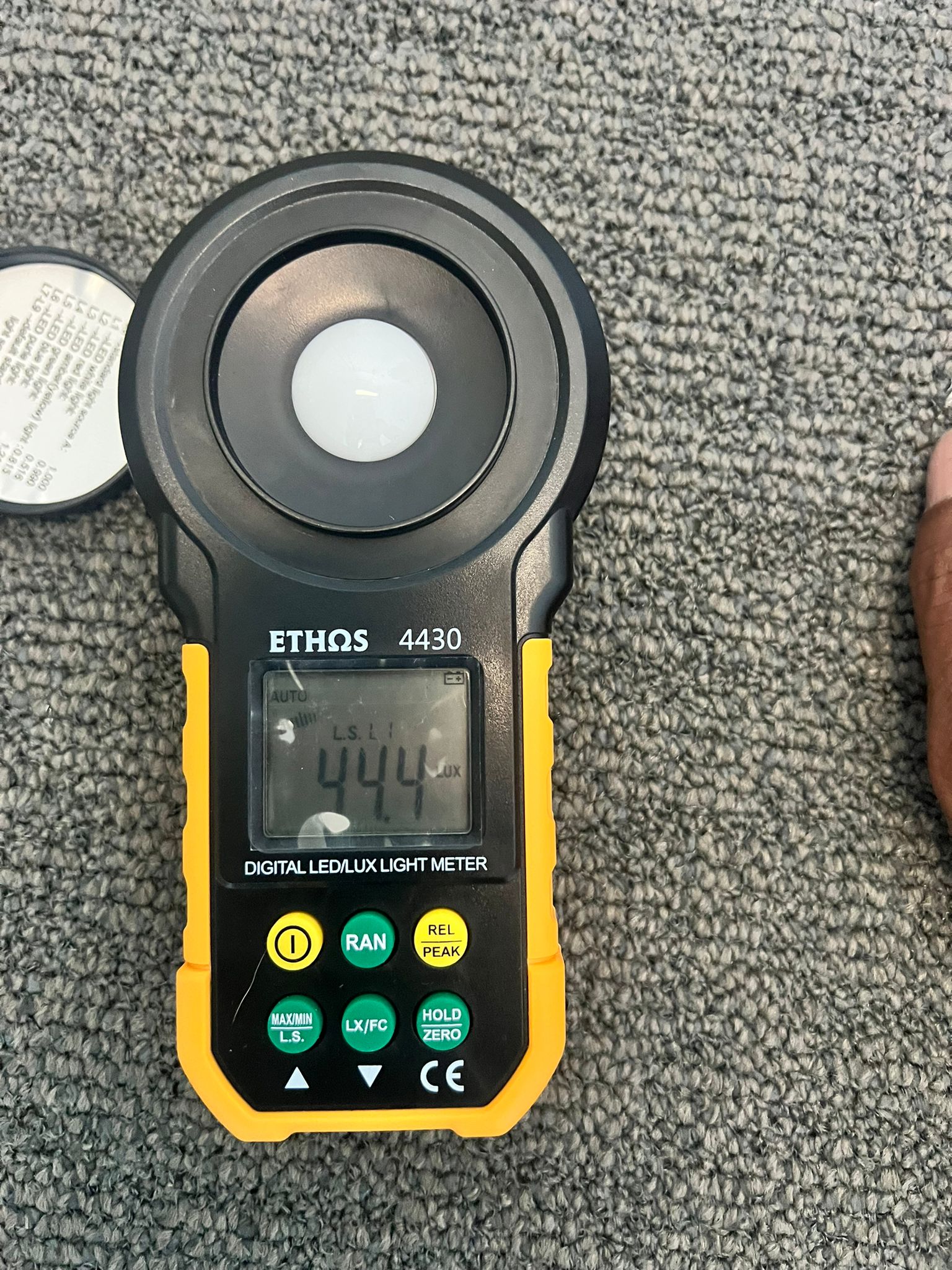
How does the process work?
Get a quote
Tell us about your premises — type, size, number of luminaires, system type and location. We provide a fixed price with no hidden costs. Quotes are free and you'll hear back the same day.
Book an appointment
We agree a date and time when the building can be unoccupied for the duration of the test — typically outside normal business hours for the annual test. You'll receive a confirmation with the engineer's details ahead of the visit.
System review
On arrival, we review the luminaire schedule and any previous test records to confirm we have a complete inventory of every fitting that requires testing. Any undocumented fittings or recent alterations are identified at this stage.
Full duration test
The mains supply to the emergency lighting system is interrupted and every luminaire is checked for activation, correct output, and sustained performance. For the annual test, we maintain the test for the full rated duration — typically 3 hours — before restoring supply and confirming all batteries are recharging.
Test certificate issued
You receive a formal test log listing every luminaire, the result, any failures, and the date of the next required test — delivered digitally. The log meets the recording requirements of BS 5266-1 and is the document insurers and fire authorities will ask to see.
Remedial works (if needed)
Failed luminaires are identified, priced, and replaced by us. Batteries past their service life are flagged with a recommended replacement date. On completion, the affected fittings are retested to confirm the system is fully satisfactory — one company from test to sign-off.