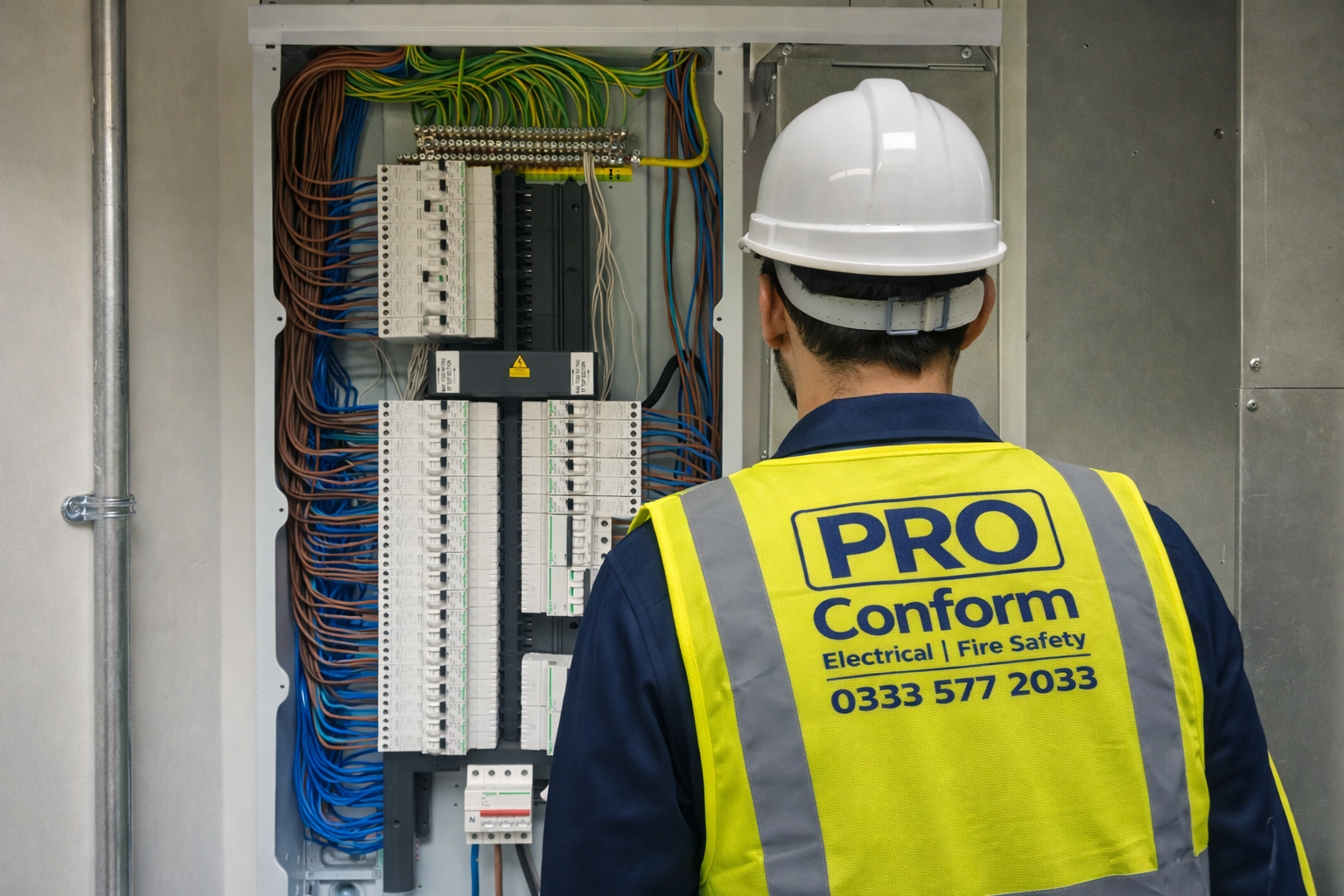
Our accreditations
 NICEIC Approved Contractor
 NICEIC Domestic Installer
 NICEIC PAT Registered
 City & Guilds
What Our Customers Say
Real feedback from property managers, landlords and businesses — verified on Google.
Tony Mann
Local Guide · Milton Keynes
✓ Verified Google Review
Taya Cleghorn
Business Owner · Bedford
Marina Azhar
Property Manager · London
Tony Mann
Local Guide · Milton Keynes
✓ Verified Google Review
Taya Cleghorn
Business Owner · Bedford
Marina Azhar
Property Manager · London
What is an EICR?
An EICR (Electrical Installation Condition Report) is a formal report — not a certificate — on the condition of a fixed electrical installation, assessed against the current edition of BS 7671 at the time of inspection. It applies to the installation regardless of its age.
The inspector examines the installation for safety, wear and tear, corrosion, damage, excessive loading, age, external influences, and suitability for current use. You receive a full schedule of test results alongside the report, giving you a complete record of every circuit tested, what was found, and why it matters.
The overall outcome is reported as either Satisfactory — meaning the installation is safe for continued use — or Unsatisfactory, meaning remedial action is required before the installation can be considered safe.
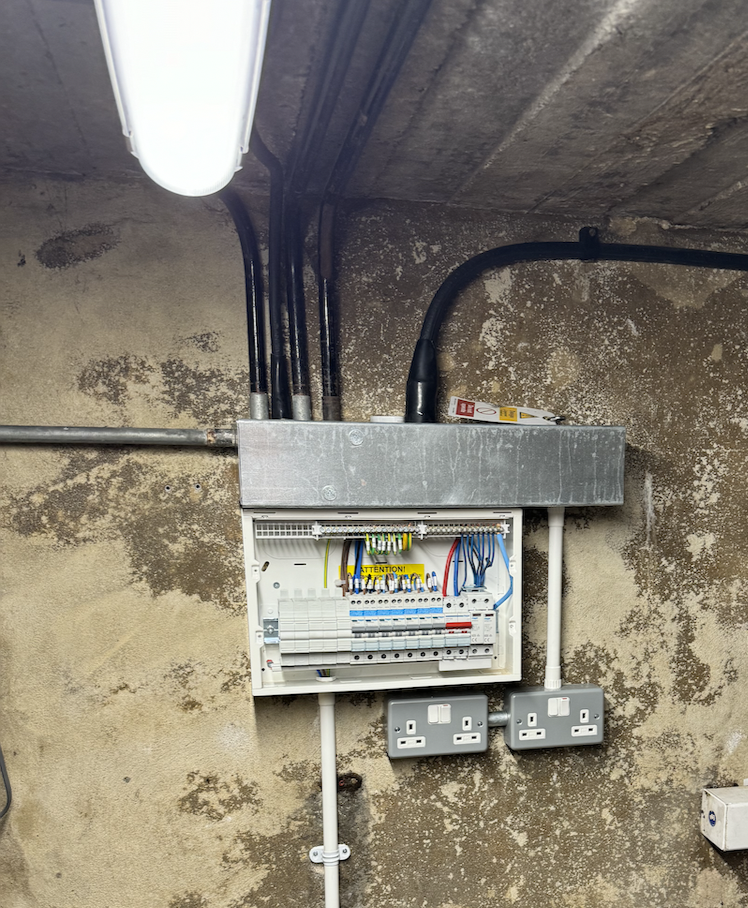
Danger present
Immediate remedial action required. The installation poses an immediate risk to persons. Action must be taken before the engineer leaves site.
Potentially dangerous
Urgent remedial action required. Not immediately dangerous at the time of inspection, but would become so if a fault or foreseeable event occurred.
Improvement recommended
Not a source of immediate or potential danger, but improvement would enhance safety. A C3 observation alone does not make the overall outcome unsatisfactory.
Further investigation required without delay
A potential safety issue could not be fully determined within the agreed scope of the inspection. Investigation must not be deferred.
Source: Electrical Safety First Best Practice Guide 4, Issue 7.2
When do you need one?
Private Landlords
Every 5 years or at each change of tenancy, whichever comes first. Required under the Electrical Safety Standards in the Private Rented Sector (England) Regulations 2020. You must provide a copy of the current EICR to tenants before they move in and to the local authority on request.
Houses in Multiple Occupation (HMOs)
Every 5 years under HMO licensing conditions. Local authorities may specify shorter intervals as a licence condition. Failure to comply can result in licence refusal or revocation.
Commercial Premises
Typically every 5 years, or at the reinspection interval recommended on the previous EICR. Duty holders must maintain electrical systems so they do not give rise to danger under the Electricity at Work Regulations 1989.
Any Property
After a significant change of use, major alteration, suspected damage, fire, or flood — or where remedial works have been completed on an unsatisfactory EICR and a re-test is needed to confirm the installation is now satisfactory.
Why is it a legal requirement?
Electrical Safety Standards in the Private Rented Sector (England) Regulations 2020
Landlords must obtain a valid EICR and supply a copy to existing tenants within 28 days of the inspection, to new tenants before occupation, and to the local authority within 7 days of a request. Local authorities can impose a financial penalty of up to £30,000 per breach.
Electricity at Work Regulations 1989
Employers and the self-employed must ensure that electrical systems are maintained to prevent danger. An EICR provides documented evidence that this duty has been fulfilled — without one, you cannot demonstrate compliance.
Health and Safety at Work etc. Act 1974
Employers and those who control premises have a general duty of care. A periodic EICR carried out by a competent person demonstrates that duty has been met and provides a formal audit trail if a claim or investigation ever arises.
No report means no defence
Without a current EICR you have no documented evidence that the condition of your electrical installation was formally assessed by a competent person. If something goes wrong — a fire, an injury, or a local authority inspection — the absence of a valid report leaves you without a defence.
An EICR does not guarantee the installation will remain safe indefinitely; it confirms it was assessed as satisfactory at the time of inspection. This is why reinspection at the recommended interval is essential.
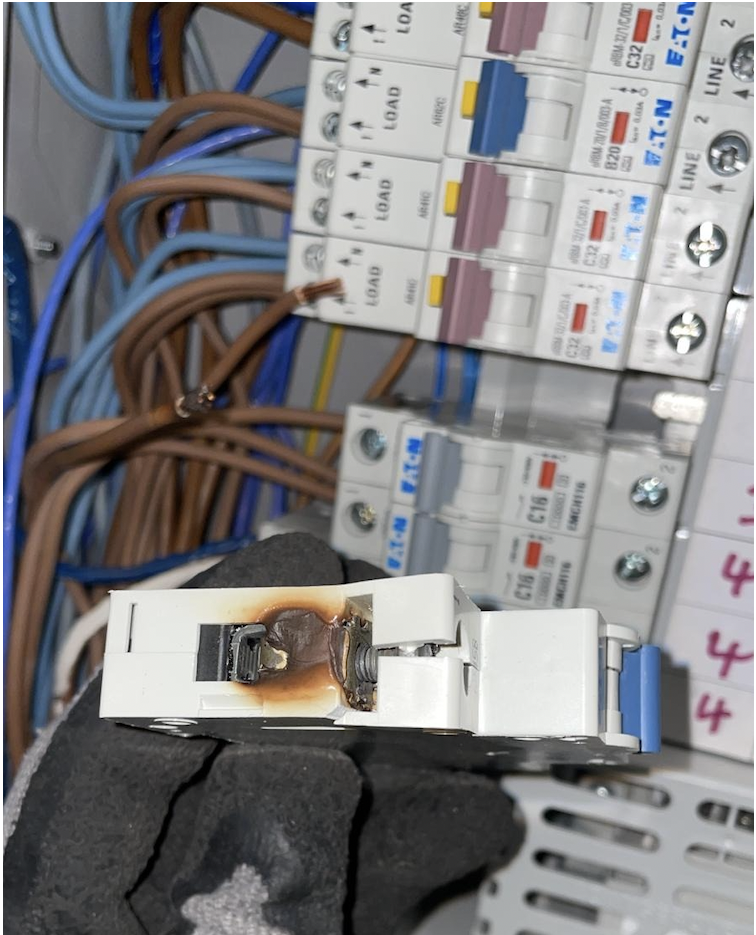
Who can carry out an EICR?
Periodic inspection and testing must only be carried out by electrically skilled persons competent in such work. The Electrical Safety First Best Practice Guide 4 sets out that as a minimum the inspector must:
- Have sufficient knowledge and experience of electrical installation matters to avoid injury to themselves and others.
- Be familiar with the requirements of BS 7671, including those relating to periodic inspection, testing and reporting.
- Be skilled in the safe application of the appropriate test instruments and test procedures.
- Have a sound knowledge of the particular type of installation to be inspected, so they can proceed safely.
Membership of an approved registration scheme — such as NICEIC — provides independent verification that an electrician meets these competency requirements and is assessed regularly against current standards.
How does the process work?
Get a quote
Tell us about your property — type, size, number of circuits and location. We provide a fixed price with no hidden costs. Quotes are free and you'll hear back the same day.
Book an appointment
We agree a date and time that works for you. We aim to attend within 5 working days. You'll receive a confirmation with the engineer's details ahead of the visit.
Inspection and testing
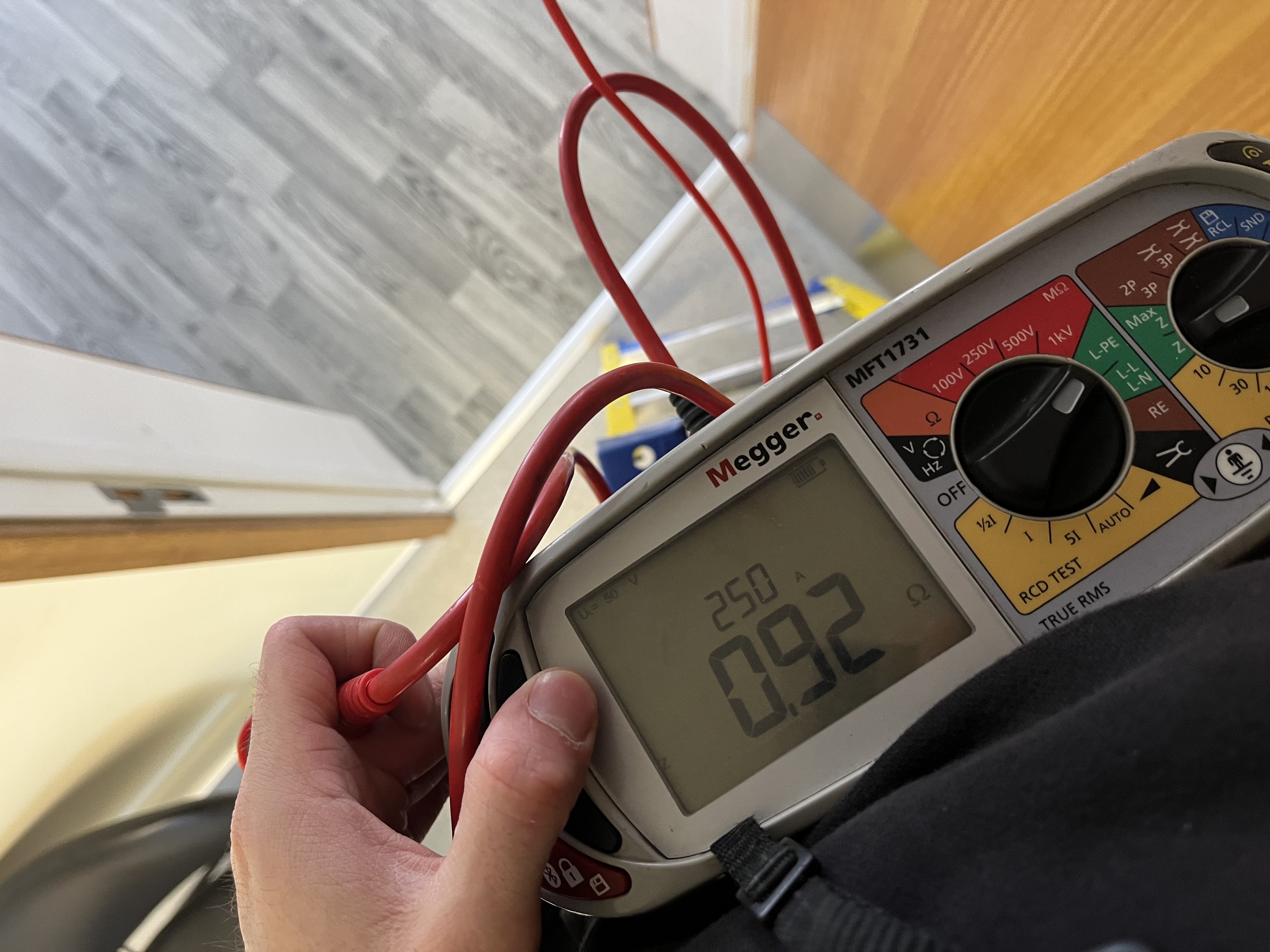
Our engineer carries out a full visual inspection of all accessible electrical equipment, dead testing of circuits with the supply isolated, and live testing including earth fault loop impedance, RCD performance, and polarity verification.
Observations are coded
Every item requiring attention is recorded in the report with the appropriate classification code — C1, C2, C3 or FI — alongside a plain-English description of what was found and why it matters.
Report issued
You receive the EICR with a full schedule of test results and an overall outcome of Satisfactory or Unsatisfactory, delivered digitally. The report remains valid until the recommended reinspection date stated within it.
Remedial works (if needed)
If C1 or C2 observations are recorded, we provide a fixed-price quote for the remedial works and carry them out ourselves. On completion, we re-test the affected circuits to confirm the installation is satisfactory — one company from inspection to sign-off.