
Our accreditations
 NICEIC Approved Contractor
 NICEIC Domestic Installer
 NICEIC PAT Registered
 City & Guilds
What Our Customers Say
Real feedback from property managers, landlords and businesses — verified on Google.
Tony Mann
Local Guide · Milton Keynes
✓ Verified Google Review
Taya Cleghorn
Business Owner · Bedford
Marina Azhar
Property Manager · London
Tony Mann
Local Guide · Milton Keynes
✓ Verified Google Review
Taya Cleghorn
Business Owner · Bedford
Marina Azhar
Property Manager · London
What installation work do we carry out?
We carry out the full range of fixed electrical installation work for domestic, commercial, and industrial premises — from straightforward additional circuits and consumer unit upgrades to complete rewires, EV charger installations, fire alarm systems, and emergency lighting.
All work is designed and installed to BS 7671:2018+A3:2024 (the current edition of the IET Wiring Regulations). On completion you receive an Electrical Installation Certificate (EIC) — the formal document confirming the installation has been inspected, tested, and meets the requirements of the standard at the time of completion.
For domestic work notifiable under Part P of the Building Regulations, we self-certify through NICEIC — you do not need to separately notify your local authority, and we provide the completion certificate that building control requires.
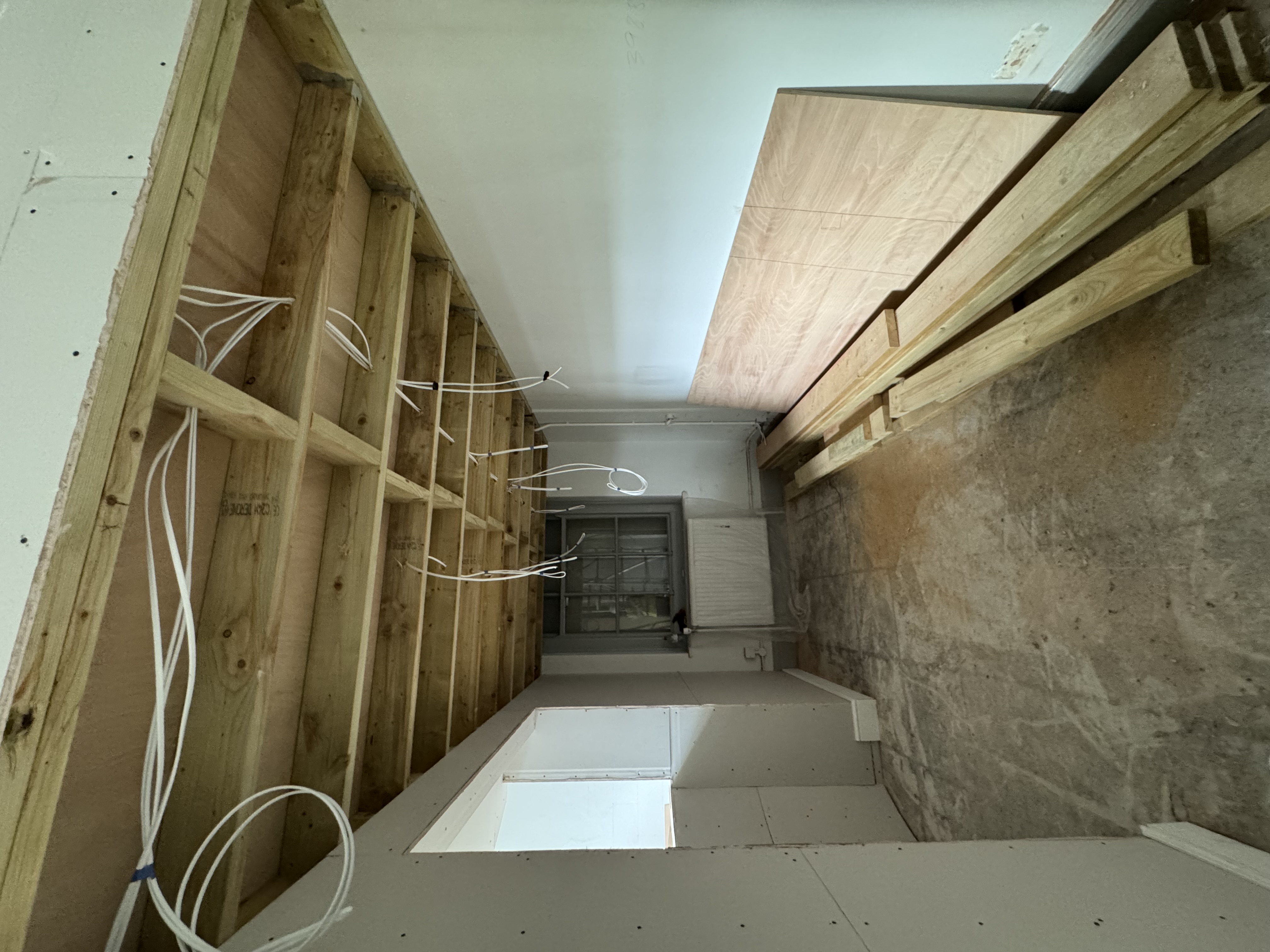
Installation services we provide
Power & distribution
Consumer unit upgrades, sub-mains, distribution boards, metering, surge protection, earthing and bonding upgrades, UPS and essential supplies.
EV charging
Domestic and commercial EV charge point supplies, load-management ready feeds, and associated distribution upgrades.
Fire alarm & emergency lighting
New fire alarm systems to BS 5839-1, emergency lighting systems to BS 5266-1, and integration with AOV and smoke control supplies.
Rewires & refurbishment
Full and partial rewires for domestic and commercial premises, including lighting, power, and containment replacement with minimal disruption.
When do you need installation work?
Refurbishment or change of use
Any significant alteration to a building — office refit, residential conversion, change of occupancy — typically requires new or upgraded electrical installation. The existing installation must be assessed against current requirements and upgraded where necessary before it can be certified.
Increased electrical demand
Adding EV chargers, air source heat pumps, or significant additional load to an existing installation often requires consumer unit upgrades, new sub-mains, or supply capacity increases. An EICR is typically required first to confirm the existing installation can safely accommodate the additional load.
Remedial works following an EICR
Where an EICR has returned an Unsatisfactory outcome with C1 or C2 observations, remedial works are required before the installation can be considered safe. We carry out remedials to the affected circuits, re-test on completion, and issue an updated certificate confirming the installation is now satisfactory.
New compliance obligations
Changes in occupancy, HMO licensing, or fire risk assessment outcomes can trigger a requirement for new or upgraded fire alarm or emergency lighting systems. We design, install, and commission systems to the current standards and provide the certificates your compliance record requires.
Why use a NICEIC-approved installer?
Part P Building Regulations (domestic work)
Most notifiable electrical work in a dwelling must either be approved by a local authority building control body, or carried out by a competent person registered with an approved scheme. As a NICEIC-approved contractor we self-certify domestic work — meaning you receive your completion certificate without a separate building control application.
Electricity at Work Regulations 1989
Employers and duty holders must ensure that electrical systems are constructed, maintained, and used so as to prevent danger. An Electrical Installation Certificate issued by a NICEIC-approved contractor is the primary evidence that new or altered installation work meets this requirement at the time of completion.
Insurance and liability
Most buildings insurers require that electrical installation work is carried out by a competent, registered contractor. Work carried out by an unregistered person without building control sign-off may not be covered and can invalidate your policy. NICEIC registration provides insurers and surveyors with the assurance they require.
What an EIC covers
An Electrical Installation Certificate is not the same as a test certificate. It is a formal declaration by the designer, installer, and inspector that the installation has been designed, constructed, inspected, and tested in accordance with BS 7671 — and confirms it was safe for energisation at the time of completion.
Without an EIC, you have no documented evidence that the installation work was carried out correctly. This matters when you come to sell the property, renew your insurance, undergo a fire safety inspection, or receive a compliance audit.

Who can carry out electrical installation work?
Electrical installation work must only be carried out by competent persons — those with sufficient technical knowledge, practical experience, and understanding of the relevant standards to complete the work without creating danger to themselves or others.
For domestic premises, most notifiable electrical installation work must be carried out by a contractor registered with a government-approved competent person scheme — such as NICEIC — or separately approved by local authority building control. Unregistered work without building control sign-off is a criminal offence under the Building Regulations.
- Full working knowledge of BS 7671:2018+A3:2024 (IET Wiring Regulations, current edition) and its application to the type of installation being carried out.
- Ability to design, install, inspect, and test to the required standard and to correctly complete the relevant certification — EIC, MWC, or EICR.
- For specialist systems (fire alarm, emergency lighting), additional competency in the relevant system standards — BS 5839-1 and BS 5266-1 respectively.
- Registration with NICEIC or equivalent approved scheme for domestic work notifiable under Part P of the Building Regulations.
NICEIC assesses contractors annually against current standards — including on-site inspection of work completed. Registration is the recognised independent benchmark of competence for electrical installation work in the UK.
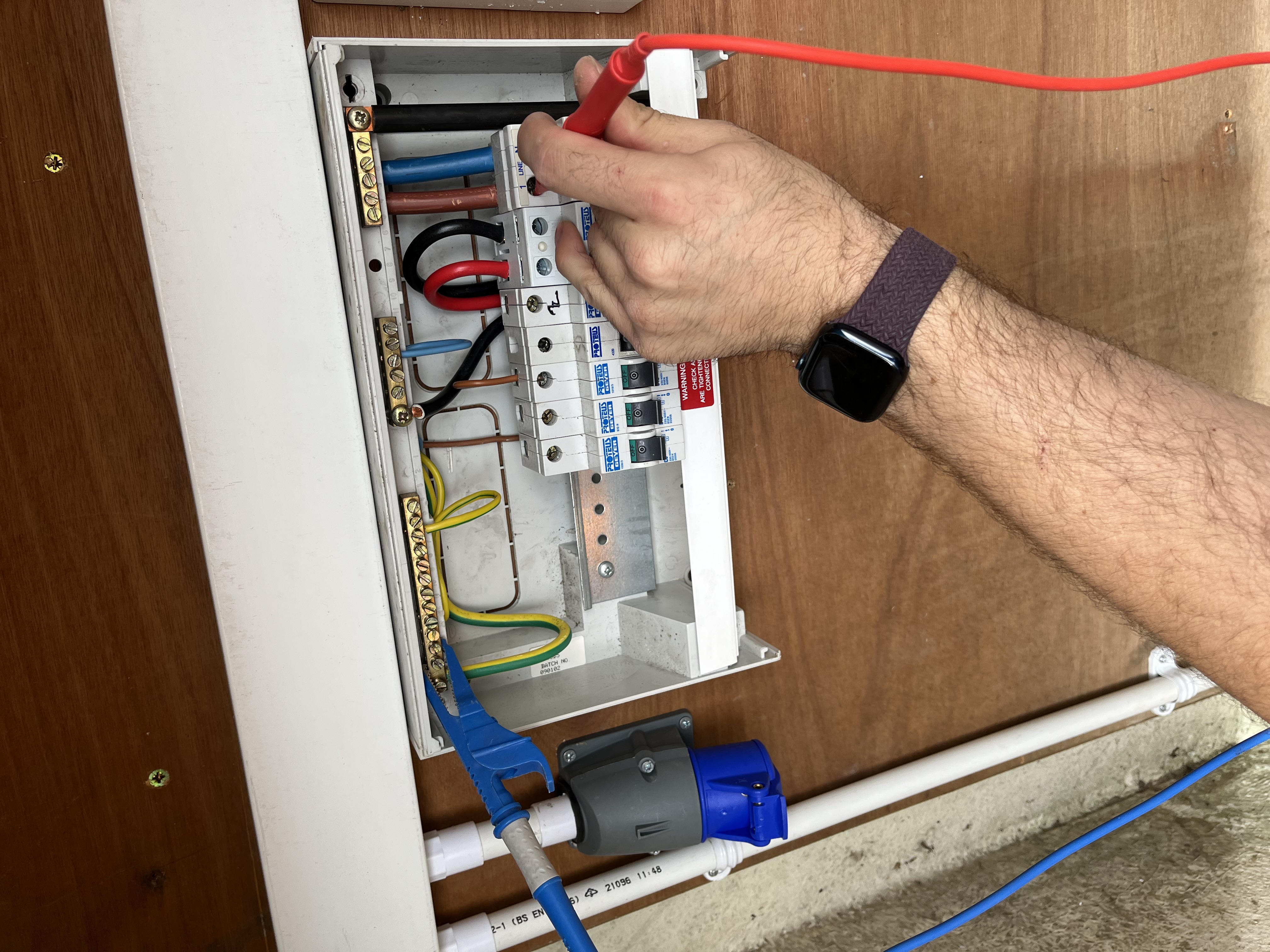
How does the process work?
Get a quote
Tell us about your premises and what you need — type of work, scale, and location. For straightforward jobs such as consumer unit upgrades or EV charger installations, we can quote remotely. For larger projects, we arrange a free site survey first.
Site survey (where required)
For commercial installations, rewires, or new systems we attend site to assess the existing installation, agree scope, identify access requirements, and confirm coordination needs with other trades. You receive a fixed-price specification with transparent variation and dayworks rates.
Programme agreed
We agree a programme that works around your operations. For occupied premises we plan work to minimise disruption — phased circuits, out-of-hours working, or section-by-section handover where required.
Installation
Work is carried out by our own NICEIC-approved engineers to BS 7671 throughout — not subcontracted. Containment, cabling, terminations, and labelling are all completed to the standard required before testing begins.
Inspection and testing
Every new or altered circuit is inspected and tested before energisation — continuity, insulation resistance, polarity, earth fault loop impedance, and RCD performance. Test results are recorded on the schedule of test results that forms part of the EIC.
Certification and handover
You receive the Electrical Installation Certificate with a full schedule of test results, circuit schedule, and as-fitted drawings where applicable — delivered digitally. For domestic work notifiable under Part P we handle the building control notification and provide your completion certificate.